

SERVICES


How Databricks Is Powering the Next Era of Operational Intelligence
Operations teams have always been the heartbeat of execution, people who make things happen when strategy meets reality. But in many organisations, their dashboards haven’t evolved.
Leaders still rely on fragmented reporting tools, weekly Excel dumps, and delayed performance insights. The result? Decisions made on stale data and entire teams waiting for “the next refresh.”
It’s time to change that.
This blog explores how organisations can move from manual to autonomous dashboards using Databricks AI/BI Genie, Unity Catalog, and the new Lakehouse-native Dashboards, without depending on third-party tools like Power BI, Tableau, or Palantir.
Because intelligence shouldn’t live in a licence. It should live where your data already does, inside the Lakehouse.
The Old Pattern: Layers, Licences, and Latency
For more than a decade, analytics evolved in layers.
- ETL tools extracted data.
- Data warehouses stored it.
- BI platforms visualised it.
- Ops teams consumed it (eventually).
Every handoff created friction. Every dashboard refresh meant another ticket to the data team and every upgrade meant another licence negotiation.
I’ll admit it: I used to love these tools. Power BI, Tableau, Palantir, you name it! Each brought its own strengths, visuals, and community. But they also created silos, duplication, and maintenance overhead.
The truth is simple: You can’t build real-time operations on yesterday’s architecture.
The New Pattern: Lightning Architecture on Databricks
As a Chief Data Officer, I’ve spent years watching teams struggle under the weight of complexity: beautiful dashboards, dozens of connectors, multiple BI tools, and yet… still waiting for answers.
That’s why I’ve become an advocate for what I call the Lightning Architecture, a model built not on more layers, but on less friction. An architecture that’s unified, governed, and instantly actionable.
The formula is simple:
Data + AI + BI = One Platform.
This is the architecture we’ve been waiting for: fast, intelligent, explainable, and human.
And yes, AI is changing BI. It is not a small shift, it is a complete redefinition of how people interact with data. I will continue to repeat this because I am on a mission to make it real. Not in theory, but in practice.
In the past, we built dashboards that reported what happened. Now, with Databricks, we’re building systems that understand why it happened and even suggest what to do next.
Here’s what that transformation looks like in motion:
- Data is unified.
From ingestion to analysis, everything lives in one governed Lakehouse: no exports, no duplication, no shadow copies. - Insights are instant.
Through AI/BI Genie, business users ask questions in natural language and get trustworthy, visual answers backed by Unity Catalog lineage. - Decisions are operationalised.
With Databricks Apps, those same insights trigger workflows, assign tasks, and update systems, transforming dashboards into decision surfaces.
That’s the Lightning Architecture: A single ecosystem where data becomes conversation, conversation becomes action, and action becomes measurable impact.
This is not about dashboards. It’s about closing the gap between insight and execution. Faster, safer, and smarter than ever before.
And as long as I wear the CDO badge, this is the mission I’ll keep repeating:
To make intelligence accessible, explainable, and useful for everyone.
The Key Enablers:
- Databricks Dashboards: Native, governed, and directly connected to Delta tables and Unity Catalog, now with the same level of analytical power you’d expect from leading BI platforms. Users can apply aggregate functions, filters, drill-downs, custom metrics, and advanced visualisations, all inside Databricks. It’s everything you’d do in Power BI or Tableau but without the data movement, latency, or licence constraints.
- AI/BI Genie: Conversational intelligence for business users. Ask, “What’s our repair backlog by region?” and get instant, visual answers full lineage and governance context.
- Unity Catalog (UC): Centralised governance, lineage, and permissions. Govern once, reuse everywhere. Trust isn’t optional, it’s built in.
- Databricks Apps: Extend dashboards into interactive operational interfaces. Assign tasks, trigger workflows, or notify teams directly from the same environment.
This is not just another dashboard. It’s an operational control plane that integrates data, decisions, and actions.
Industry Use Case: Operations in Action in the Housing sector
Imagine a Maintenance Operations Lead in a housing association. Her team manages hundreds of properties, each generating repair tickets.
In the old world:
- Data comes from multiple systems (CRM, finance, field reports).
- Analysts spend days reconciling datasets.
- Dashboards update weekly.
- Field teams waste hours on inefficient routes.
In the new Databricks-native setup:
- All data is ingested via Lakeflow and cleaned in the Bronze → Silver → Gold Medallion layers using SQL.
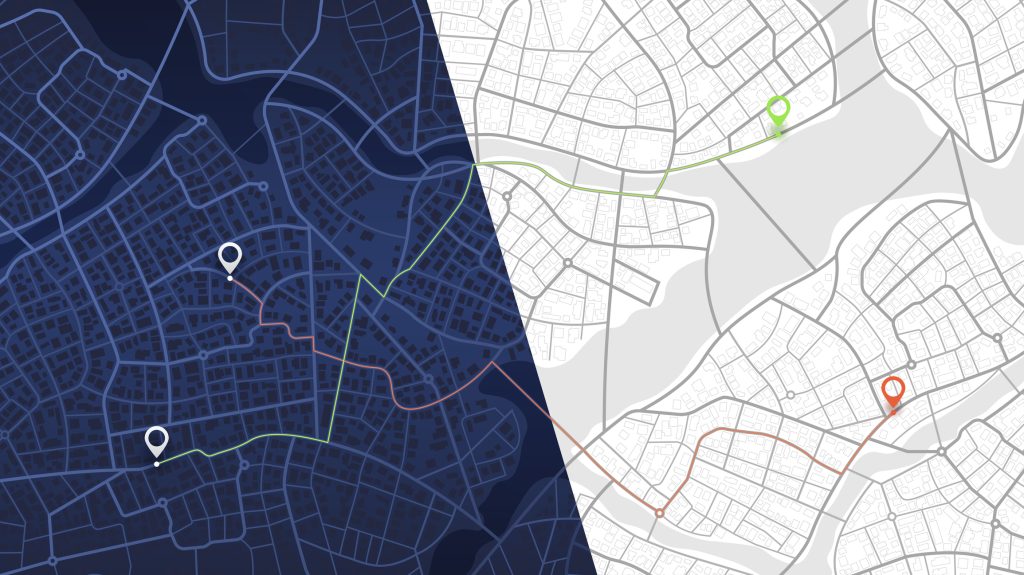
- Repair requests are geocoded with Spatial SQL, prioritised by urgency and cost.
- AI/BI Genie surfaces insights like:
“Which regions have the highest repair cost per square metre this week?”
- Field engineers get a real-time view of optimal routes powered by geospatial functionality and Delta caching in Databricks.
The result? A 360° operational view, without ever leaving the Lakehouse.
How Different Leaders Benefit
Ops Directors – Gain a real-time command centre for performance, SLAs, and resource utilisation, all without waiting for end-of-month reports.
Service Managers – Access prioritised job queues and interactive dashboards that trigger workflows or assign engineers automatically.
Data Engineers – Build scalable data products directly with SQL, leveraging Databricks Dashboards and Lakeflow to automate ingestion, transformation, and delivery.
Executives – Access governed insights through AI/BI Genie, no more static slides, just live intelligence aligned with the business pulse.
The Lakehouse Advantage
The Databricks Lakehouse isn’t just a data platform, it’s an ecosystem that merges governance, performance, and AI.
Here’s how it powers autonomous dashboards:
|
Layer |
Technology |
Purpose |
|
Ingestion |
Lakeflow / Auto Loader |
Stream data from source systems in real time |
|
Transformation |
Delta Live Tables (DLT) |
Build pipelines declaratively with versioning |
|
Governance |
Unity Catalog |
Centralised metadata, lineage, and security |
|
Analytics |
Databricks SQL / Spatial SQL |
Run analytical queries and geospatial operations |
|
AI |
AI/BI Genie |
Natural language analytics and generative insights |
|
Action |
Databricks Dashboards / Apps |
Deliver operational interfaces and insights |
Every layer is connected. Every decision is traceable. No exports, no API delays, just governed intelligence in motion.
A Human-Centric Shift
This shift isn’t just about technology, it’s cultural. Ops leaders, data teams, and executives need to collaborate around the same, live data.
When you remove silos and licences, something powerful happens:
- Ops teams stop “consuming dashboards.”
- They start operating from them.
That’s what autonomy really looks like.
The Road Ahead: From Insights to Action
The future of operational analytics is not about better charts, it’s about systems that act on data.
- With Databricks AI/BI Genie, every metric can be conversational.
- With Unity Catalog, every insight can be trusted.
- And with Databricks Apps, every decision can be executed instantly.
You don’t need five dashboards and three licences to see the truth. You just need one governed Lakehouse.
The Takeaway: Simplify to Accelerate
You don’t need more tools.
You need fewer and smarter ones.
I’m still grateful for what Power BI, Tableau, and Palantir taught us. But the next era belongs to platforms that unify, not fragment.
Ops teams are not waiting anymore , they’re automating.
And with Databricks, the dashboard is not the end of the journey.
It’s where action begins.